
Can Liver Fibrosis Be Detected Without a Biopsy? The Latest Tests
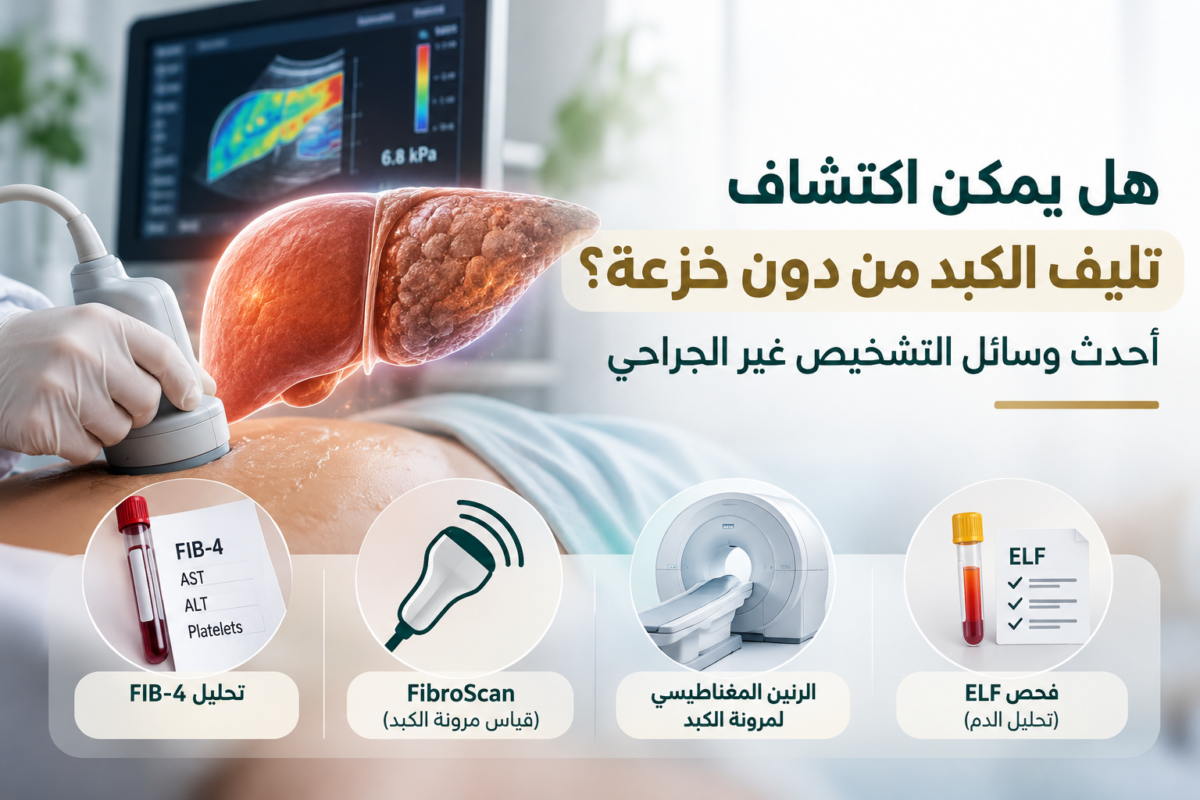
Can Liver Fibrosis Be Detected Without a Biopsy? The Latest Noninvasive Diagnostic Methods
For many years, assessing liver fibrosis was associated with taking a sample of liver tissue and examining it under a microscope. Today, in many cases, it is possible to estimate the likelihood and severity of fibrosis using noninvasive tests based on blood tests or measurements of liver stiffness.
This does not mean that liver biopsy is no longer important, but it is no longer the first step for every patient. The modern approach often begins with simple tests, moves to more accurate assessments when needed, and reserves biopsy for cases in which the picture remains unclear.
What Is Liver Fibrosis?
Fibrosis is the formation of scar tissue within the liver as a result of ongoing injury or inflammation over a long period. It can develop because of various conditions, including metabolic dysfunction-associated steatotic liver disease, viral hepatitis, certain immune-mediated diseases, alcohol use, and other causes.
In its early stages, fibrosis may not cause any obvious symptoms. This makes it important to identify people at higher risk before they develop cirrhosis and the complications of advanced liver disease.
Why Are Liver Enzymes Alone Not Enough?
Some people assume that normal ALT and AST results necessarily mean there is no liver fibrosis. However, the situation is more complex.
Some patients can have significant fibrosis without a clear elevation in liver enzymes. Doctors therefore usually combine medical history, risk factors, blood tests, and noninvasive fibrosis assessments to obtain a more accurate picture.
The First Step: The FIB-4 Score
One of the most widely used tools for initial assessment is a score called FIB-4. It does not require a special blood test: it is calculated using age, AST and ALT levels, and the platelet count.
Its main purpose is not to provide a definitive diagnosis of fibrosis, but to group patients into risk categories that help determine who can be monitored and who needs further testing.
For patients aged 35–64 who are at risk of metabolic dysfunction-associated steatotic liver disease, recent guidelines indicate that a result below 1.3 is generally associated with a low risk of advanced fibrosis. Results of 1.3 or above call for additional assessment according to the clinical situation. Values above 2.67 increase suspicion of significant fibrosis and warrant specialist evaluation.
FIB-4 does not simply tell a patient, “You have fibrosis” or “You do not have fibrosis.” Its main value is helping doctors identify who needs to move on to the next stage of testing.
FibroScan: What Does It Measure?
If the initial assessment indicates that further testing is needed, doctors may use vibration-controlled transient elastography (VCTE). FibroScan is one of the best-known commercial devices used for this technique.
The procedure is similar to an ultrasound scan in its simplicity and measures the stiffness of liver tissue. As fibrosis increases, liver stiffness tends to rise.
When assessing metabolic dysfunction-associated steatotic liver disease, stiffness measurements help classify risk. Low values may make advanced fibrosis less likely, while high values call for a more detailed assessment by a liver specialist.
Does FibroScan Determine the Fibrosis Stage with Complete Accuracy?
No. The result should not be interpreted in isolation from the other medical information.
Liver stiffness can be affected by factors other than fibrosis, such as acute inflammation, liver congestion associated with certain heart conditions, and eating before the examination. Severe obesity may also affect measurement quality in some patients.
Doctors therefore interpret the number together with blood tests and the clinical picture, rather than treating it as a standalone diagnosis.
The ELF Test: What Can Blood Tell Us?
There are also blood tests that are more specialized than FIB-4, including the Enhanced Liver Fibrosis (ELF) test.
This test measures a group of markers associated with the formation and remodeling of fibrous tissue in the liver. It can be used as a second-line test in some patients to estimate the likelihood of advanced fibrosis and future liver-related outcomes.
As with other noninvasive tests, the result is considered alongside the patient’s health and other test findings.
Magnetic Resonance Elastography
One of the most accurate noninvasive methods is magnetic resonance elastography (MRE). It combines magnetic resonance imaging with measurements of wave movement within liver tissue to produce a map of stiffness.
It may be useful when other test results are inconclusive or do not match the degree of clinical suspicion.
However, its cost and availability make it less commonly used than FibroScan for initial assessment. It is therefore often reserved for selected cases or specialist centers.
Why Use More Than One Test?
Each test examines the problem from a different perspective, and no single noninvasive test can provide the right answer for every patient.
A stepwise strategy is therefore widely used: doctors start with a simple blood-based score such as FIB-4. If the result raises concern, they proceed to liver elastography or a specialized test, then decide whether further evaluation is needed.
When Is a Liver Biopsy Still Necessary?
Despite major advances in noninvasive testing, liver biopsy remains important in some situations.
Doctors may consider it when noninvasive test results conflict or remain inconclusive, when more than one liver disease is suspected, or when the nature of inflammation and injury needs to be assessed directly in the tissue.
A biopsy may also be discussed when liver enzymes remain elevated without a clear explanation. Modern techniques have reduced the need for biopsy in many cases, but they have not eliminated its role.
Why Is Biopsy Not the First Test for Everyone?
A biopsy provides very important information about liver tissue, but it is an invasive procedure that requires inserting a needle to obtain a small sample from the organ.
The sample also represents only a very small portion of the liver. The severity of fibrosis may vary from one area to another, resulting in what is known as sampling error.
In many cases, it therefore makes sense to begin with safe, repeatable, noninvasive tests and proceed to biopsy when there is a clear diagnostic need.
Who Needs a Fibrosis Risk Assessment?
Assessment is particularly important for people with factors that increase the likelihood of advanced fatty liver disease, such as:
- Type 2 diabetes.
- Obesity, particularly when accompanied by other metabolic risk factors.
- Fat in the liver detected on imaging.
- High blood pressure and abnormal blood lipid levels.
- Persistently elevated liver enzymes.
- More than one metabolic risk factor.
Having one of these factors does not mean that a person has fibrosis. It may, however, place them among those who benefit from a more detailed assessment instead of waiting for symptoms to appear.
What Do Recent Recommendations Say?
Recent guidelines support a stepwise noninvasive assessment rather than performing a liver biopsy in every patient suspected of having fibrosis.
FIB-4 is used as the first step in many clinical pathways. Liver elastography or the ELF test is then used for patients whose results indicate an intermediate or high risk.
Recommendations also emphasize that magnetic resonance elastography can provide a more accurate assessment in selected cases, particularly when initial findings are unclear or do not match the clinical picture.
Can Fibrosis Be Monitored Without Repeated Biopsies?
This is one of the main advantages of noninvasive testing: some tests can be repeated over time and their results compared, which is more practical than performing repeated biopsies.
However, a small change in a single number does not necessarily mean that fibrosis has improved or worsened. Trends over time are therefore interpreted alongside changes in weight, blood sugar, liver enzymes, and overall health.
Assessing liver fibrosis today relies less on biopsy alone. For many patients, a series of blood tests and liver elastography assessments can identify the level of risk and guide the next step, while biopsy remains an important tool when noninvasive tests do not provide a clear answer.
This content is intended for general medical awareness. The accuracy and limitations of fibrosis tests vary according to age, the cause of liver disease, the patient’s health, and how the test is performed. Results should not be interpreted, or treatment decisions made, without assessment by a specialist physician.